
Sucrose Beyond Sweetness: A Versatile Scaffold for Macrocyclic and Functional Materials
Sucrose is universally recognized as a dietary sweetener, yet from a chemical standpoint this simple disaccharide offers a remarkably rich and underexploited scaffold for synthetic chemistry. Composed of a glucose unit and a fructose unit joined through a distinctive glycosidic linkage, this carbohydrate presents eight hydroxyl groups distributed across a rigid, well-defined three-dimensional framework, providing numerous sites for selective chemical modification.
This combination of natural abundance, low cost, inherent chirality, and structural rigidity has positioned sucrose as an attractive starting material for building complex synthetic architectures, including macrocyclic compounds capable of selectively binding smaller guest molecules. Interest in these sugar-derived macrocycles has grown steadily as researchers seek renewable, biodegradable alternatives to conventional petrochemical-derived host molecules used in separation science, catalysis, and drug delivery.
As one of the most widely produced organic compounds on earth, sucrose benefits from mature, large-scale purification infrastructure that ensures consistent availability of high-purity starting material at relatively low cost compared with many specialty synthetic building blocks. This combination of scale, purity, and renewability distinguishes it from many alternative scaffolds considered for macrocycle synthesis, most of which require more resource-intensive production routes.
Related Products
Structural Basis for Selective Functionalization
The differential reactivity of sucrose's eight hydroxyl groups arises from subtle differences in steric accessibility and electronic environment across the two sugar rings, allowing chemists to achieve regioselective protection and functionalization with appropriately chosen reagents and reaction conditions. Primary hydroxyl groups are generally more accessible to bulky protecting groups than secondary hydroxyls, providing an initial handle for directing subsequent chemistry toward specific positions on the molecule.
Achieving high regioselectivity often requires iterative sequences of protection, functionalization, and deprotection, each step demanding careful optimization to avoid unwanted side reactions or loss of stereochemical integrity. Catalytic methods, employing selective catalysts capable of discriminating between chemically similar hydroxyl environments, have substantially expanded the synthetic toolkit available for accessing selectively modified sucrose derivatives without resorting to lengthy multistep protecting-group strategies.
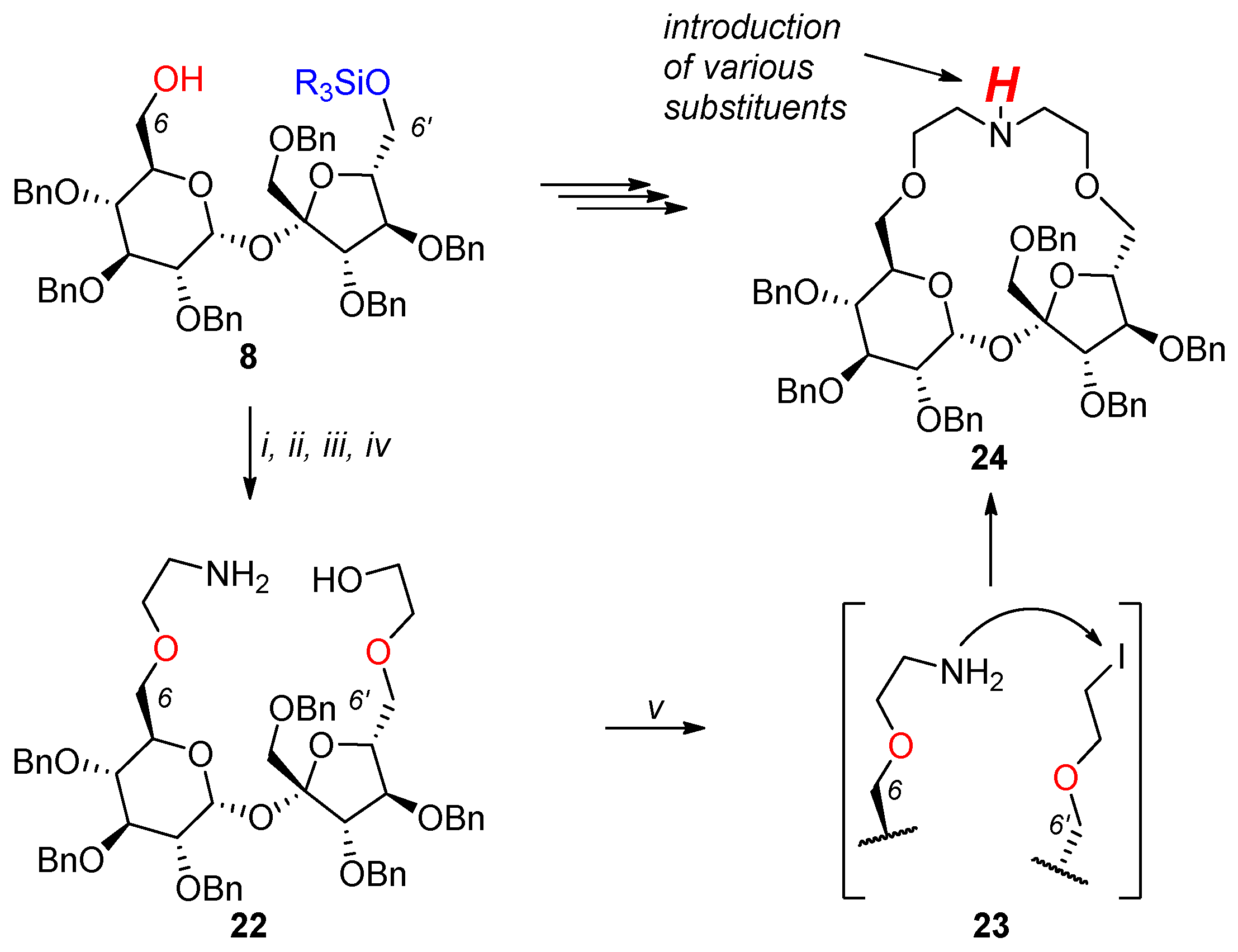 Fig 1. Selective functionalization and cyclization of sucrose into macrocyclic host architectures. (Jarosz S, Pakulski Z. 2025)
Formation of the macrocyclic ring itself can proceed through direct linkage between two or more sucrose units, or through incorporation of complementary linker molecules that bridge functionalized positions on a single sugar scaffold. The choice of linker chemistry, whether based on ester, ether, or triazole connectivity, significantly influences the rigidity, size, and overall symmetry of the resulting macrocycle, offering chemists considerable latitude in tailoring cavity dimensions to a specific target application.
Macrocycle Architecture and Host-Guest Recognition
Cyclization of appropriately functionalized sucrose derivatives yields macrocyclic structures in which multiple sugar units, or sucrose combined with complementary linker molecules, are joined into closed ring systems possessing a defined internal cavity. The size, shape, and chemical environment of this cavity determine which guest molecules can be selectively accommodated, a principle central to host-guest chemistry that underlies applications ranging from molecular sensing to controlled release.
Because the parent sugar retains multiple hydroxyl groups even after macrocyclization, the resulting architectures often display favorable water solubility compared with many conventional synthetic macrocycles, an advantageous property for applications requiring compatibility with aqueous or biological environments. Functioning as versatile molecular ligands, these macrocycles can be further elaborated with additional recognition elements to enhance selectivity toward specific target molecules of pharmaceutical or analytical interest.
Compared with cyclodextrins, which are constructed from repeating glucose units linked in a symmetric ring, sucrose-based macrocycles offer an additional degree of structural diversity because the fructose component introduces a distinct furanose ring geometry alongside the more familiar pyranose architecture. This structural asymmetry can be leveraged to create binding cavities with shapes and electronic environments that are difficult to replicate using purely glucose-derived macrocyclic hosts.
Applications in Drug Delivery and Molecular Encapsulation
The cavity-forming capability of sucrose-based macrocycles has attracted particular interest for encapsulating poorly water-soluble drug candidates, potentially improving their apparent solubility and bioavailability without requiring covalent modification of the active pharmaceutical ingredient itself. This non-covalent encapsulation strategy is conceptually similar to that employed by cyclodextrins, a related family of naturally derived cyclic oligosaccharides already established in pharmaceutical formulation.
Beyond simple solubility enhancement, appropriately designed macrocyclic hosts can also modulate the release kinetics of an encapsulated guest, offering a route toward sustained-release formulations. Exploration of these systems within cancer research has considered their potential as delivery vehicles for cytotoxic agents, where controlled release and improved solubility could help reduce off-target toxicity associated with poorly formulated chemotherapeutics.
Further elaboration of these macrocyclic scaffolds through conjugation with hydrophilic polymer chains has also been explored as a strategy for constructing nanocarrier systems with extended systemic circulation times, drawing on formulation principles well established for other polymer-drug conjugate platforms. Combining the intrinsic guest-binding capacity of the macrocycle with the pharmacokinetic benefits of polymer conjugation represents a promising direction for future formulation development.
Analytical and Synthetic Considerations
Rigorous structural confirmation of newly synthesized sucrose derivatives relies heavily on multidimensional nuclear magnetic resonance spectroscopy, given the structural similarity among the numerous possible regioisomeric products that can arise from incomplete selectivity during functionalization. Mass spectrometry provides complementary confirmation of molecular composition, particularly valuable for larger macrocyclic products where subtle structural differences may not be immediately apparent from spectroscopic data alone.
Purification of synthetic intermediates and final macrocyclic products typically requires chromatographic separation capable of resolving closely related sugar derivatives, alongside access to well-characterized reference materials for confirming product identity and purity. Reliable supplies of high-purity starting amino acids and other building blocks used in linker synthesis further support reproducible access to these sugar-derived macrocyclic architectures across different research laboratories.
Broader Materials Science Applications
Beyond pharmaceutical applications, sucrose-derived macrocycles and related functionalized derivatives are being explored as components of stimuli-responsive materials, molecular sensors, and separation media capable of discriminating between structurally similar small molecules. Their inherent biodegradability offers a potential sustainability advantage over conventional synthetic polymers used in analogous applications, aligning with growing interest in renewable feedstocks across materials chemistry.
Interaction studies between these macrocyclic hosts and biological macromolecules, including proteins, have additionally suggested potential utility as tools for modulating protein-ligand interactions or as scaffolds for constructing multivalent binding platforms, an area that continues to expand as synthetic methodology for these sugar-derived architectures matures.
Ongoing efforts to streamline synthetic routes toward these macrocycles, potentially through enzymatic or chemoenzymatic strategies that improve regioselectivity while reducing the number of protection and deprotection steps required, are likely to further lower barriers to broader adoption of sucrose-derived scaffolds across both academic and industrial research settings.
Conclusion
Sucrose exemplifies how a familiar, abundant natural product can serve as a sophisticated platform for synthetic chemistry when its structural complexity is approached with appropriate selectivity and synthetic strategy. The development of sucrose-based macrocycles illustrates a broader trend toward exploiting renewable carbohydrate feedstocks for constructing functional molecular architectures traditionally associated with petrochemical starting materials.
Continued advances in selective functionalization chemistry, together with expanding characterization of host-guest binding behavior, are likely to further broaden the range of applications accessible to these sugar-derived macrocycles, spanning drug delivery, molecular sensing, and sustainable materials science in the years ahead.
Reference
- Jarosz S, Pakulski Z. Sucrose-based macrocycles: An update. Molecules, 2025, 30(13): 2721.
 .
.