
Salmonella Typhi: Pathogenic Mechanisms, Host Interactions, and Strategies for Detection and Control
Salmonella Typhi is a host-restricted, intracellular bacterial pathogen responsible for typhoid fever, a systemic infection that continues to affect populations in regions with limited access to safe water and sanitation. Unlike many other Salmonella serovars, which infect a broad range of animal hosts, this organism is adapted almost exclusively to humans, a specificity that has shaped its evolution toward highly refined mechanisms of immune evasion and long-term persistence. Infection begins with ingestion of contaminated food or water, after which the bacterium must survive a hostile passage through the gastric environment before reaching the intestinal mucosa.
The clinical and public health importance of this pathogen extends well beyond the acute febrile illness it produces. A subset of infected individuals become long-term carriers, silently shedding the organism and sustaining community transmission for years. Understanding the molecular basis of protein-mediated invasion, intracellular adaptation, and biofilm-associated persistence is therefore central to improving surveillance, diagnosis, and prevention strategies aimed at reducing the global burden of typhoid fever.
Because the disease is transmitted almost entirely through the fecal-oral route, its distribution closely tracks the availability of clean drinking water, adequate sewage disposal, and safe food handling practices. Urban informal settlements with overcrowded housing and inadequate infrastructure remain particularly vulnerable, and seasonal patterns often coincide with periods of heavy rainfall that facilitate contamination of shared water sources. Children and adolescents frequently bear a disproportionate share of the disease burden in these settings, which has shaped the design of many national immunization strategies.
Related Products
Structural and Genomic Features of Salmonella Typhi
Salmonella Typhi is a Gram-negative, flagellated member of the Enterobacteriaceae family, distinguished from related serovars by a capsular polysaccharide antigen that masks surface structures and dampens early innate recognition. Its genome encodes a compact arsenal of virulence determinants organized into pathogenicity islands, which coordinate the expression of secretion systems, adhesins, and regulatory RNA elements that fine-tune gene expression in response to environmental cues encountered inside the host.
A large fraction of the genome consists of pseudogenes that have accumulated through host restriction, reflecting a process of genome reduction commonly observed in specialist pathogens. This streamlining has eliminated redundant metabolic pathways while preserving and often amplifying the regulatory circuits required for intracellular survival, making the organism highly efficient at exploiting the specific niches available within a human host.
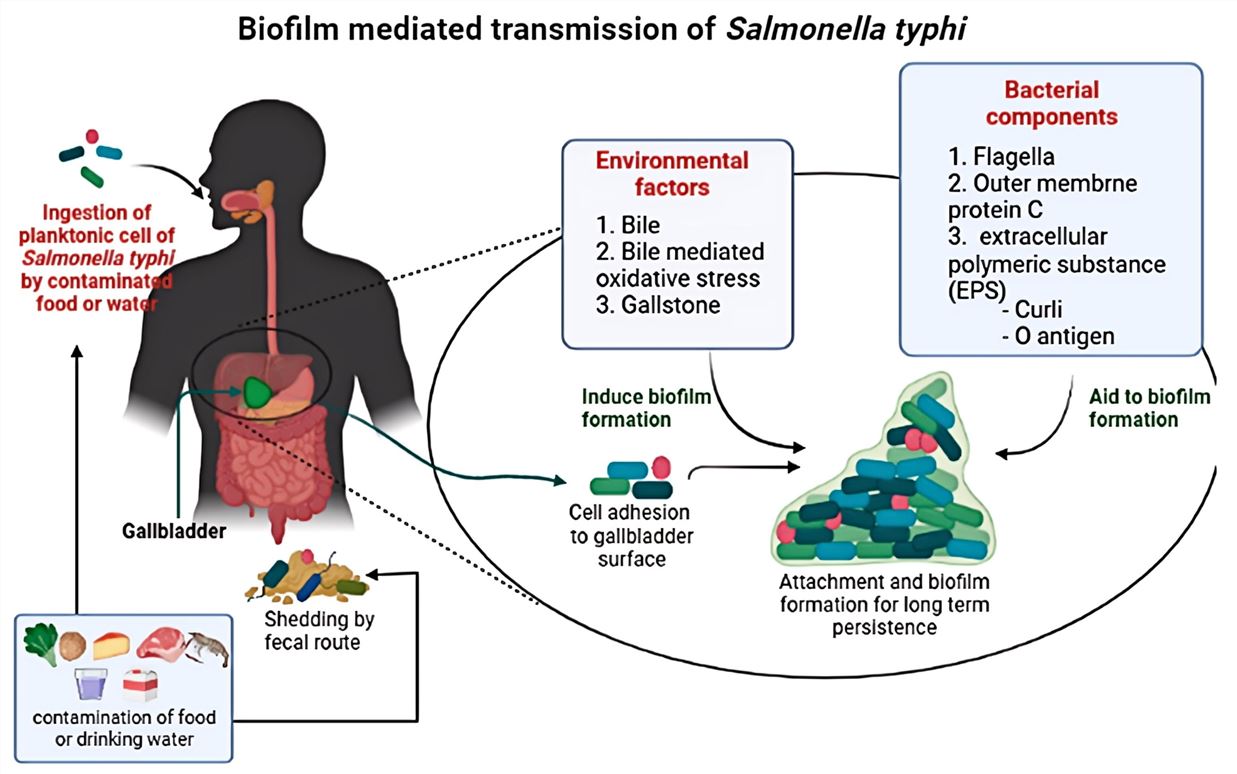 Fig 1. Schematic of Salmonella Typhi transmission and biofilm-mediated persistence within the host. (Jahan F, et al. 2022)
Mechanisms of Host Cell Invasion and Intracellular Survival
Following passage through the acidic stomach environment, the bacterium encounters specialized epithelial cells overlying gut-associated lymphoid tissue and exploits a type III secretion system to inject effector molecules directly into the host cell cytoplasm. These effectors trigger localized cytoskeletal rearrangements that promote bacterial engulfment, a process that co-opts normal cellular machinery rather than relying on passive phagocytosis.
Once internalized, the organism resides within a modified vacuole rather than being routed toward lysosomal destruction. A second, distinct secretion system is deployed at this stage to remodel the vacuolar membrane and establish a replicative niche that shields the bacterium from many host defense mechanisms. Studies using primary cells isolated from intestinal and reticuloendothelial tissues have been instrumental in dissecting how these vacuolar interactions differ between typhoidal and non-typhoidal serovars, helping to explain the systemic dissemination that is characteristic of typhoid fever.
After crossing the intestinal barrier, bacteria are transported by phagocytic cells through lymphatic channels into the bloodstream, ultimately reaching the liver, spleen, and bone marrow. Intracellular survival within these deeper tissues depends on the ability of the organism to resist oxidative and nutritional stress, further underscoring the sophistication of its adaptation to a purely human reservoir.
Biofilm Formation and Chronic Carriage
One of the most clinically significant aspects of typhoid pathogenesis is the tendency of the organism to colonize the gallbladder, particularly in the presence of gallstones, where it forms structured biofilm communities embedded within a self-produced extracellular matrix. This matrix, composed of exopolysaccharides, curli fibers, and other structural components, protects resident bacteria from bile salts, oxidative stress, and immune effectors, allowing persistence for extended periods.
Regulatory networks governing biofilm development respond to environmental signals such as bile concentration and quorum-sensing molecules, coordinating the transition between planktonic and sessile lifestyles. Bacteria residing within these communities display reduced susceptibility to many antimicrobial agents, which helps explain why standard treatment courses often fail to clear gallbladder carriage entirely, leaving a reservoir capable of intermittent shedding into the intestinal tract.
Chronic carriers, who may remain entirely asymptomatic, represent a critical but frequently overlooked link in the transmission cycle. Because biofilm-associated bacteria are shed intermittently rather than continuously, detecting carriage reliably requires repeated sampling and sensitive laboratory methods, adding complexity to public health surveillance efforts in endemic regions.
Immune Evasion and Host-Pathogen Interactions
Salmonella Typhi has evolved multiple strategies to blunt host immune recognition. Modification of surface lipopolysaccharide reduces detection by pattern recognition receptors, while the capsular antigen limits complement deposition and antibody binding. Within phagocytic cells, the organism actively interferes with the maturation of the vacuole it occupies, preventing fusion with degradative compartments.
The adaptive immune response, including production of specific antibodies directed against surface antigens, plays an important role in eventual clearance of acute infection, yet this response is often insufficient to eliminate bacteria sequestered within biofilms or intracellular niches. Persistent antigen exposure during chronic carriage may also contribute to a state of partial immune tolerance, further favoring long-term survival of the pathogen within its human host.
Environmental and food-chain surveillance complements clinical case detection by identifying contamination sources before they trigger widespread outbreaks. Routine testing of municipal water supplies, coupled with monitoring of food handling establishments, allows public health authorities to intervene at the point of contamination rather than responding only after cases accumulate. Integrating environmental data with clinical reporting systems provides a more complete picture of transmission dynamics within a community.
Diagnostic Approaches and Surveillance
Accurate and timely diagnosis of typhoid fever remains challenging because early symptoms overlap considerably with other febrile illnesses common in endemic settings. Blood culture remains a reference method, although its sensitivity can be limited depending on bacterial load and prior antimicrobial exposure. Molecular assays capable of rapid pathogen nucleic acid detection offer a faster alternative, supporting earlier clinical decision-making and more responsive outbreak investigation.
Identification of chronic carriers is particularly important for outbreak control and typically relies on repeated stool and bile sampling using standardized clinical swabs and samplers, often combined with imaging to detect gallstones. Serological approaches integrated into broader diagnostics workflows can complement culture-based methods, although cross-reactivity with related serovars requires careful interpretation. Continued refinement of high-throughput and point-of-care assays is expected to strengthen surveillance capacity in resource-limited settings where the disease burden is greatest.
Interactions between the pathogen and resident gut microbiota further shape the course of infection, since competition for nutrients and niche space can either restrain or facilitate colonization depending on the composition of the existing microbial community. Disruption of this ecological balance, for instance through prior antimicrobial exposure, may create opportunities for more efficient intestinal colonization and subsequent invasion, adding another layer of complexity to the host factors that influence susceptibility to typhoid fever.
Vaccination, Treatment Challenges, and Antimicrobial Resistance
Vaccination remains one of the most effective tools for reducing typhoid incidence, particularly in children living in endemic areas. Conjugate formulations that pair a purified capsular polysaccharide with a carrier protein have improved immunogenicity and durability of protection compared with earlier generations of vaccines, supporting their inclusion in national immunization programs in several high-burden countries.
Treatment of confirmed infection relies primarily on antimicrobial therapy, but the emergence of multidrug-resistant and extensively drug-resistant strains has substantially narrowed available options in many regions. Resistance determinants are frequently carried on mobile genetic elements that spread efficiently within bacterial populations, and high-throughput screening platforms are increasingly used to identify novel compounds or combination strategies capable of overcoming these resistance mechanisms.
Interest is also growing in alternative therapeutic approaches, including antimicrobial peptides and biofilm-disrupting agents designed to target chronic gallbladder carriage directly, which conventional antibiotics often fail to eradicate. Combining improved vaccination coverage with sustained investment in water, sanitation, and hygiene infrastructure remains essential for long-term control of this persistently important human pathogen.
Laboratory quality assurance is another important dimension of surveillance, since inconsistent culture techniques and variable antimicrobial susceptibility testing protocols can obscure true resistance trends across regions. Standardized reference materials and proficiency testing programs help ensure that data generated in different laboratories remain comparable, which is essential for tracking the international spread of resistant lineages and for informing empirical treatment guidelines used by clinicians in endemic areas.
Conclusion
Salmonella Typhi exemplifies how narrow host adaptation can drive the evolution of highly specialized virulence strategies, from targeted manipulation of host cell machinery during invasion to the construction of protective biofilm communities that sustain long-term carriage. These overlapping mechanisms complicate both diagnosis and treatment, allowing the pathogen to persist within human populations despite decades of public health intervention.
Continued progress in understanding host-pathogen interactions, together with advances in molecular diagnostics, vaccine design, and antimicrobial development, offers realistic prospects for further reducing the global burden of typhoid fever. Sustained investment in surveillance and basic research will remain essential to anticipate emerging resistance patterns and to refine strategies for identifying and managing chronic carriers within affected communities.
References
- Buzilă E R, et al. Assessing Salmonella typhi pathogenicity and prevention: The crucial role of vaccination in combating typhoid fever. International Journal of Molecular Sciences, 2025, 26(9): 3981.
- Jahan F, et al. The complex mechanism of the Salmonella typhi biofilm formation that facilitates pathogenicity: a review. International Journal of Molecular Sciences, 2022, 23(12): 6462.
- Fu M, et al. Molecular strategies of Salmonella Typhimurium: from host cell invasion and metabolic hijacking to immune evasion. Frontiers in Cellular and Infection Microbiology, 2026, 16: 1753120.
 .
.